GPT in a Domain? Trademark Risks to Avoid
Reviewed by the Domain Search King editorial team · Updated July 2026
"GPT," "ChatGPT," and other AI model names show up constantly in domain-name brainstorming. Some of that is genuinely risky. Here's the real 2023-2026 enforcement record — not legal advice, but the actual pattern of who's been sent a cease-and-desist and who hasn't.
What OpenAI's Own Guidelines Say
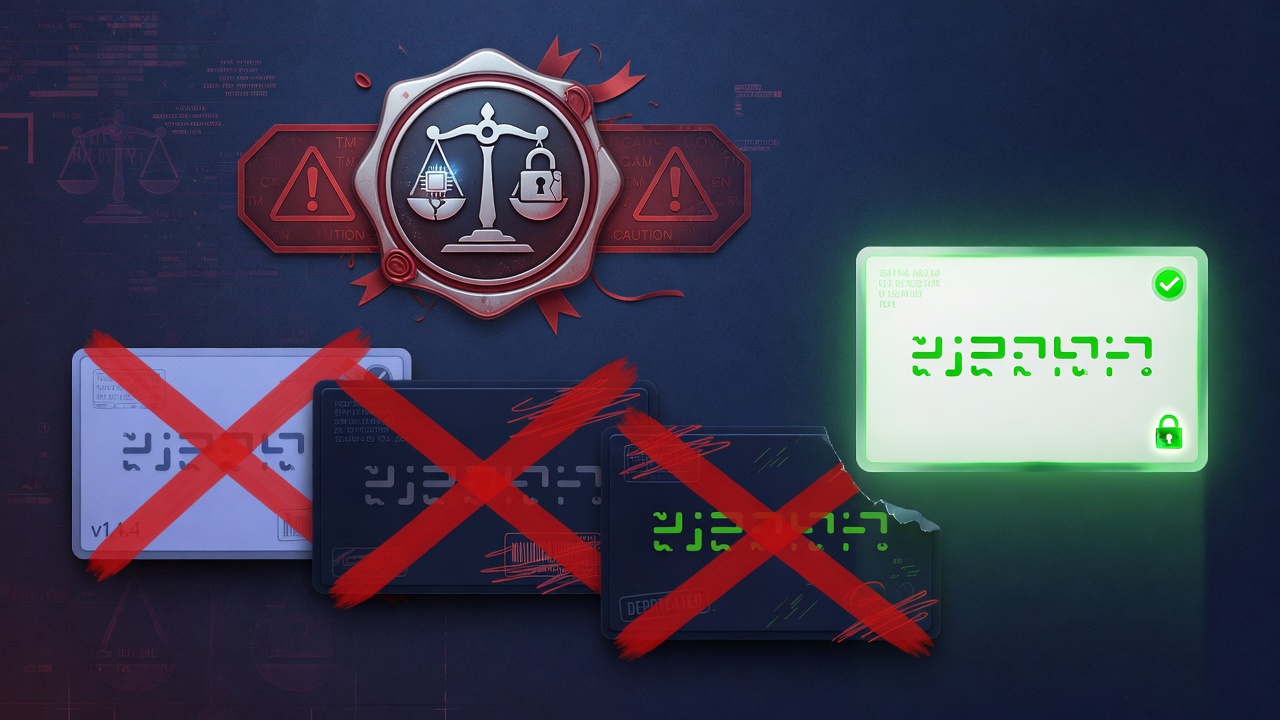
OpenAI's brand guidelines state that developers should not use "GPT" or OpenAI model names in app, product, developer, or company names — the stated concern is implying partnership or endorsement and confusing end users. OpenAI enforces this largely through BrandShield, a third-party brand-protection firm, rather than always acting directly through its own legal department (Slator).
The first known enforcement action was in May 2023: SiteGPT.ai received a cease-and-desist via BrandShield, and its operator publicly said he'd rebrand (Tech Startups). That pattern has continued: in a formal USPTO opposition filed June 2025, OpenAI challenged TDK U.S.A.'s "SensorGPT" trademark application on confusion and dilution grounds specifically because it incorporates "GPT" in full (Trademarkia).
The Genericness Paradox
Here's the twist that makes this confusing: the USPTO rejected OpenAI's own standalone application to trademark "GPT" in February 2024, ruling it merely descriptive and likely generic (TechCrunch). In October 2025, the EUIPO went further and invalidated OpenAI's existing GPT, GPT-3, and GPT-4 marks in the EU entirely for lack of distinctiveness, with GPT-5 partially invalidated too (DDG.fr). "ChatGPT" as a compound mark is treated differently — the TTAB agreed it's descriptive but left a path open via acquired distinctiveness, with an appeal still pending as of the most recent reporting found (TTABlog).
It's Not Just OpenAI
In January 2026, Anthropic sent a cease-and-desist to developer Peter Steinberger over "Clawdbot," deemed confusingly close to "Claude" — he rebranded twice, first to Moltbot, then to OpenClaw (covered contemporaneously, e.g. VentureBeat). And it isn't only smaller developers who collide — in December 2025, the Ninth Circuit affirmed a trademark injunction against OpenAI's own "io" product line in a dispute with IYO Inc. over a confusingly similar mark (IPWatchdog) — a company with essentially unlimited legal resources still lost a naming fight.
Even Google has been on the losing end: after renaming Bard to Gemini in February 2024, the USPTO refused Google's own Gemini trademark applications, citing a likelihood of confusion with a pre-existing "Gemini Data, Inc." mark in use since roughly 2011 — and Gemini Data sued Google for infringement (The Register).
Enforcement Isn't Uniform Across the Industry
Don't assume every AI brand polices its name with equal intensity. Microsoft filed, then abandoned, its own trademark application for "Copilot" — a separate, unrelated company (Copilot Software LLC) holds a registered COPILOT mark, and Microsoft uses "Copilot" extensively without a ® or ™ (AppleInsider). No documented case of active "Llama" domain enforcement by Meta was found in this research either — that doesn't guarantee Meta never will, but there's no evidence of the same proactive sweeping OpenAI and Anthropic have shown.
Higher risk — avoid
- Mark + generic suffix as your own brand: bestgpt.com, chatgptpro.io, geminiwriter.com
- The exact or near-exact wordmark as your root domain, in the same product category
- Anything implying partnership/endorsement ("official," "powered by X" in the domain itself)
Lower risk — generally fine
- A fully distinct, coined brand name for your product
- Referencing the model only descriptively in body copy ("built on GPT-4 via API")
- Comparative/review content naming the trademark to describe it, not to brand your own product
The Legal Mechanics That Actually Apply to Domains
Most domain disputes don't go to full federal litigation — they go through UDRP (Uniform Domain-Name Dispute-Resolution Policy), which requires a complainant to prove three things: the domain is identical or confusingly similar to a mark they hold rights in, the registrant has no legitimate interest in it, and it was registered and used in bad faith (WIPO UDRP Guide). Resolution typically takes about 60 days, and the remedy is transfer or cancellation of the domain, not damages. Separately, US federal law also recognizes trademark dilution for "famous" marks, which doesn't require proving customer confusion at all — just that a junior use blurs or tarnishes the famous mark.
Nominative fair use is the legal concept that separates "mentioning" from "branding": referencing a mark only as much as necessary to describe something, with nothing implying endorsement, is generally protected. Using that same mark as your own brand identity is a different, much riskier act — no AI company has extended a special carve-out for this; it's the same general trademark principle applied to a new context.
Find a Name That's Actually Yours
Skip the trademark-adjacent naming entirely — get AI-generated, RDAP-verified-available names that don't ride on someone else's brand.
Generate names now → Read: invented vs keyword namesFrequently Asked Questions
Can I use "GPT" in my domain name?
OpenAI's brand guidelines explicitly say not to use GPT or its model names in product/company names, and it enforces this through BrandShield. Even though "GPT" alone was ruled merely descriptive/generic, OpenAI continues to actively oppose and send cease-and-desist notices over it.
Is "GPT" a valid trademark?
It's contested. USPTO rejected the standalone application in 2024; EUIPO invalidated GPT/GPT-3/GPT-4 marks in the EU in October 2025. Genericness rulings don't stop active enforcement, though.
Are short, invented AI names automatically safe from trademark disputes?
No. A Ninth Circuit court affirmed an injunction against OpenAI's own "io" line over a similar mark. Even large companies collide on short names.
Do all AI companies enforce their trademarks the same way?
No. OpenAI and Anthropic have both actively pursued enforcement. Microsoft abandoned its own Copilot trademark application and uses the name without registered protection.
What's the difference between mentioning an AI model and branding around it?
Referencing a product descriptively in body text is comparatively lower risk. Using the mark as your own brand identity — like registering bestgpt.com — is where most enforcement has occurred.